


Content plays a central role in every Digital Marketing campaign. From building trust and improving SEO to nurturing customer relationships and boosting conversions, everything revolves around content.
In today’s rapidly evolving digital age, Digital Marketing has become an essential component of any business strategy. Among the many factors contributing to the success of Digital Marketing, content stands out as the core element—the "backbone" of every campaign.
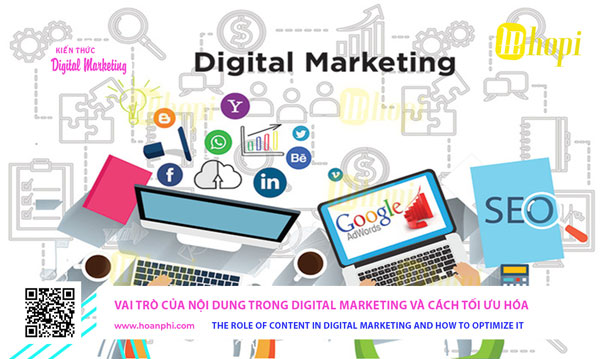
So, what role does content play in Digital Marketing? And how can we optimize content to attract and retain customers? This article dives into the significance of content in Digital Marketing and offers strategies, tools, and methods for effective content optimization.
1. Content as the Foundation of Digital Marketing
In traditional marketing, content was often limited to advertising messages. However, in the digital realm, content comes in various forms: blog posts, videos, infographics, emails, social media posts, podcasts, and more.
Here are the key roles of content in Digital Marketing:
1.1. Communication with Customers
Content acts as a bridge between businesses and their customers. It conveys messages, introduces products or services, explains benefits, builds trust, and nurtures long-term relationships.
1.2. Enhancing Brand Awareness
A consistent, high-quality content strategy helps your brand stay visible and relevant. Over time, customers begin to recognize and trust your brand as a reliable source of information.
1.3. Boosting SEO and Website Traffic
Search engines favor quality content. SEO-friendly, regularly updated content helps improve search rankings, resulting in more organic traffic to your website.
1.4. Converting Potential Customers
Content plays a critical role in guiding potential customers through their buying journey—from awareness to decision-making. Educational articles, product reviews, and problem-solving guides can accelerate the conversion process.
2. Common Types of Content in Digital Marketing
Here are some of the most widely used content formats:
2.1. Blog Posts
Blogging is a cost-effective and SEO-friendly way to share valuable insights and demonstrate expertise. Well-written blog posts help educate audiences and drive consistent traffic.
2.2. Video Marketing
Video is currently the "king" of content. Platforms like YouTube, TikTok, and Facebook prioritize video content. Short, engaging videos are easily consumed and widely shared.
2.3. Infographics
Infographics simplify complex data and make it visually appealing. They are highly shareable and ideal for audiences who prefer visual content.
2.4. Email Marketing
Emails remain a powerful tool for maintaining contact and nurturing leads. Email content should be concise, valuable, and include a clear call-to-action (CTA).
2.5. Social Media Content
Posts on platforms like Facebook, Instagram, LinkedIn, etc., facilitate real-time engagement with audiences. Content should be creative, flexible, and tailored to each platform.
3. How to Optimize Content in Digital Marketing
Creating good content is just the beginning. What truly matters is optimizing your content for maximum impact. Here's how:
3.1. Know Your Target Audience
Before crafting content, ask yourself: "Who am I writing for?" Understanding your audience’s age, gender, occupation, interests, and pain points ensures your content is relevant and engaging.
3.2. Tailor Content to the Customer Journey
Customers move through stages: awareness, consideration, and decision. Your content should align with each stage:
-
Awareness: Educational or helpful content (e.g., "Top 10 Summer Skincare Tips").
-
Consideration: Product comparisons, user reviews, and case studies.
-
Decision: Promotions, discounts, and strong CTAs.
3.3. Optimize Content for SEO
Search Engine Optimization (SEO) ensures your content gets discovered. Key SEO practices include:
-
Keyword research and implementation.
-
Optimizing titles and meta descriptions.
-
Clear structure with headings, short paragraphs, and lists.
-
Internal and external linking to reputable sources.
-
Image optimization (alt text, file size, etc.).
3.4. Update and Repurpose Content
Don’t always start from scratch. Refresh old content with new data, or repurpose blog posts into videos, infographics, or social media posts to maximize value.
3.5. Use Analytics to Measure Performance
Tools like Google Analytics, SEMrush, Ahrefs, and Facebook Insights help track metrics such as views, bounce rate, and conversion rate. These insights guide content strategy adjustments.
3.6. Create Interactive Content
Modern audiences love interactive content like quizzes, polls, comments, or live videos. Such content boosts engagement and increases time spent on your platform.
3.7. Optimize for Mobile Devices
With most users browsing on smartphones, make sure your content displays well, is easy to read, and loads quickly on mobile.
4. Content Trends in Digital Marketing
4.1. AI-Assisted Content Creation
AI tools like ChatGPT and Jasper AI streamline the content creation process. However, human editing is essential to maintain quality and brand voice.
4.2. Short-Form Video Content
Short videos on platforms like Reels, Shorts, and TikTok are dominating. Brands must adapt traditional content into quick, engaging formats.
4.3. Highly Personalized Content
Customers expect content tailored to their behavior, interests, and location. Personalization boosts engagement and conversion rates.
4.4. Content-Commerce Integration
Platforms like TikTok Shop and Facebook Marketplace are merging content with commerce. Now, content isn’t just about education or entertainment—it directly supports sales.


Để lại bình luận
Bình luận & Phản hồi
Đang tải bình luận...