


Discover why transitioning from Digital Marketing 4.0 to Marketing 5.0 is a strategic necessity. Learn the benefits, challenges, and how to begin the 'Technology for Humanity' journey for your business today.
The world is changing at a dizzying pace, and the field of digital marketing is no exception. We have moved from Marketing 1.0 (product-centric) to 4.0 (human-centric in the digital age). But now, a new era has begun: Marketing 5.0. This isn't just an update; it's a fundamental shift. So why must businesses urgently transition from 4.0 to 5.0? This article will delve deep into this marketing revolution, providing a clear roadmap for leaders and marketers who want to lead in the future.
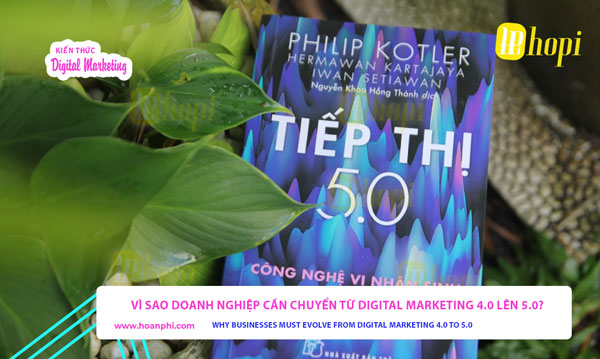
What is Digital Marketing 4.0 and why is it no longer enough?
Digital Marketing 4.0, as defined by Philip Kotler, is the shift from traditional to digital marketing, focusing on deeper connections with customers through online and offline channels. Its core is to build brand advocacy by creating authentic, human-centric conversations. It emphasizes omnichannel marketing, content marketing, and social media engagement. In its time, 4.0 was a revolution, helping businesses build communities and turn customers into loyal advocates.
However, the landscape has changed. The rise of Artificial Intelligence (AI), the Internet of Things (IoT), Big Data, and Blockchain has created a more complex and demanding environment. Marketing 4.0, while still valuable, is beginning to show its limitations:
- Limited Data Processing Capability: Humans cannot manually analyze the massive volume of data that customers generate every second. This leads to missing crucial insights.
- Lack of Predictive Ability: Marketing 4.0 is primarily reactive, analyzing what has already happened. It lacks the ability to predict future customer behavior.
- Small-Scale Personalization: Despite being human-centric, personalizing the experience for each customer deeply and at a large scale is an almost insurmountable challenge without technological assistance.
- Slow Response Speed: In an always-on world, customers expect instant responses. The processes of Marketing 4.0 can be too slow to meet these expectations.
What groundbreaking changes does Marketing 5.0 bring?
Marketing 5.0 was born as an answer to these challenges, with the core philosophy of "Technology for Humanity". It is not about replacing marketers with machines, but about the harmonious combination of human intelligence and the computational power of technology. The goal is to use technology to mimic and enhance the best human capabilities, creating value throughout the customer journey.
Marketing 5.0 is built on five key components:
- Data-Driven Marketing: This is the foundation. All decisions are made based on the collection and analysis of data from every touchpoint. Tools like a Customer Data Platform (CDP) become paramount.
- Predictive Marketing: Using AI and Machine Learning to analyze past data and predict future trends, purchasing behavior, and customer churn rates.
- Contextual Marketing: Delivering the right message, to the right person, at the right time, and in the right context. Sensor and IoT technology enable highly personalized phygital (physical-digital) interactions.
- Augmented Marketing: Using technologies like chatbots, virtual assistants, and augmented reality (AR) to enhance the customer experience and free marketers from repetitive tasks.
- Agile Marketing: Applying Agile principles (as in software development) to marketing, allowing teams to work in short cycles (sprints), rapidly test, learn, and optimize campaigns.
What benefits do businesses gain from applying Marketing 5.0?
The transition is not just a trend but a strategic imperative for survival and growth. The benefits that Marketing 5.0 brings are immense:
- Hyper-personalization at Scale: AI can analyze millions of data points to create unique experiences for each customer, from product recommendations to email content, something impossible for a human team to do manually.
- Superior Customer Experience (CX): From 24/7 support chatbots to AR try-on features, technology creates seamless, instant, and memorable interactions, increasing satisfaction and loyalty.
- Smarter Decision-Making: Instead of reacting to past performance, businesses can predict future trends, customer lifetime value (CLV), and develop proactive, resource-optimized strategies.
- Optimized ROI and Operational Efficiency: Automating repetitive tasks (like sending emails, reporting) allows marketers to focus on strategy. AI can optimize ad spend in real-time for maximum return.
- Building Sustainable Competitive Advantage: Companies that quickly adopt Marketing 5.0 will understand their customers on a much deeper level, allowing them to innovate faster and create competitive barriers that are difficult for rivals to overcome.
How to start the transition to Marketing 5.0?
The transformation journey requires a systematic plan. Here are concrete steps businesses can take:
- 1. Assess and Build Your Tech Stack: Audit your current tools (CRM, Analytics, Automation). Identify gaps and invest in a Customer Data Platform (CDP) to unify data from all sources.
- 2. Prioritize Data: Build a data-driven culture. Ensure that data is collected ethically, securely, and is accessible to relevant teams for analysis and decision-making.
- 3. Upskill & Reskill Your Team: The modern marketer needs to be tech-savvy. Invest in training courses on data science, analytics, and how to use AI tools.
- 4. Adopt an Agile Mindset: Break down large projects into small, manageable stages (sprints). Encourage experimentation, embrace failure as a learning opportunity, and iterate quickly.
- 5. Start Small with Pilot Projects: Don't try to change everything at once. Pick a specific area, such as email personalization or AI-powered ad optimization, to test and prove value before scaling up.
What challenges will businesses face during the transition?
Despite the many benefits, the transition is not without its challenges. Businesses need to anticipate and plan for them:
- Investment Costs: Implementing new technology platforms requires a significant financial investment.
- Data Security and Privacy: Collecting more data comes with a greater responsibility to protect it. Compliance with regulations like GDPR is mandatory.
- Talent Shortage: Finding personnel with expertise in both marketing and data science/AI is a major challenge in today's market.
- Resistance to Change: Employees may be hesitant to learn new technologies and workflows. Strong leadership and clear communication are needed to guide the change.
Conclusion
The shift from Digital Marketing 4.0 to 5.0 is not a choice, but an inevitable evolution driven by technology and changing consumer expectations. Businesses that hesitate will be left behind. This journey is about leveraging technology to serve humanity better, creating a smarter, faster, and more empathetic marketing landscape. The future belongs to those who can seamlessly blend the analytical power of machines with the creative and strategic heart of humans. The time to start building your Marketing 5.0 strategy is now.


Để lại bình luận
Bình luận & Phản hồi
Đang tải bình luận...