


Discover the vital role of data in the Marketing 5.0 era. This article analyzes how data shapes strategy, personalizes experiences, and creates a sustainable competitive advantage for businesses in the new technological landscape.
In the relentless whirl of the technological revolution, the field of marketing has witnessed powerful transformations, from the product-centric Marketing 1.0 to the digital-dominant Marketing 4.0. Now, we are entering a new era – the era of Marketing 5.0: Technology for Humanity. And in this era, one element is not just important but vital for survival: Data. Data is no longer a supporting tool; it has become the solid foundation, the lifeblood that sustains every modern marketing strategy.
What is Marketing 5.0 and why is it important?
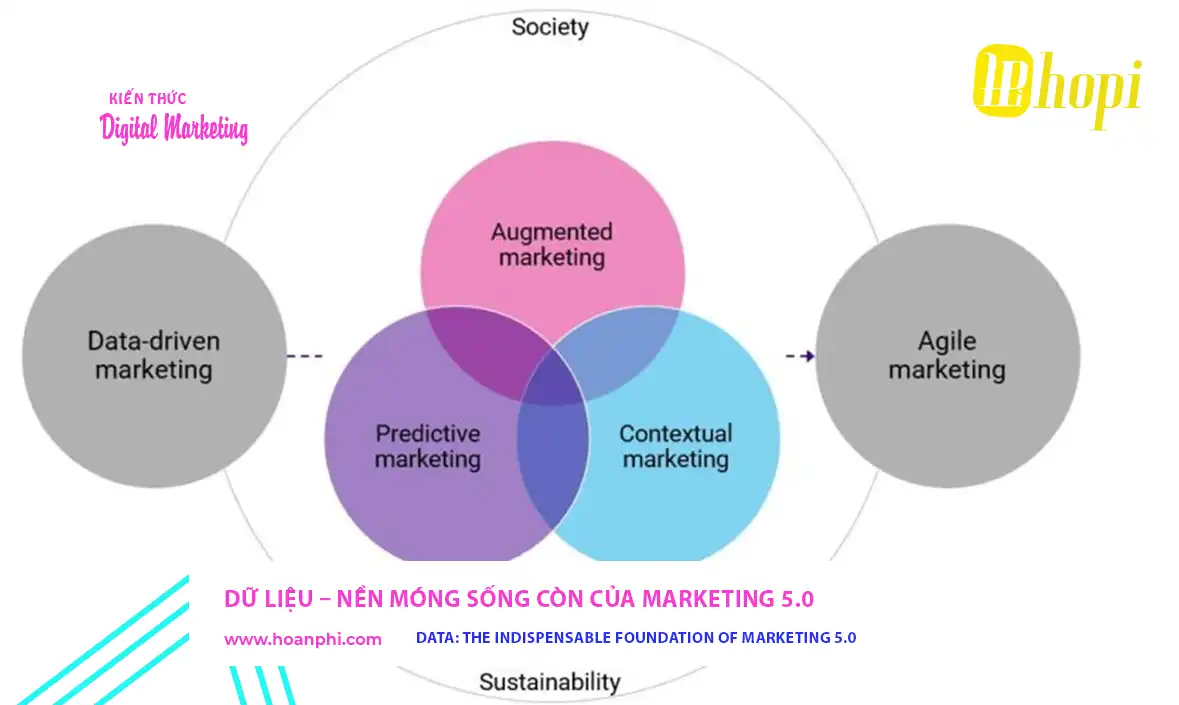
Defined by Philip Kotler, Marketing 5.0 is the application of human-mimicking technologies to create, communicate, deliver, and enhance value across the customer journey. Essentially, it is a harmonious combination of technological power (AI, NLP, IoT, Blockchain...) and human empathy and subtlety. The ultimate goal is not to replace humans, but to use technology to amplify marketers' capabilities, creating more seamless and meaningful customer experiences.
The importance of Marketing 5.0 lies in its ability to address the challenges of the new age: the fragmentation of media channels, customers' ever-increasing demand for personalization, and the need to clearly demonstrate ROI (Return on Investment). Businesses cannot survive on intuition alone; they need a data-driven approach to make accurate decisions.
What is the role of data in shaping Marketing 5.0?
If Marketing 5.0 is a skyscraper, then data is its entire foundation, determining the structure's stability and stature. Data plays a pivotal role in every aspect:
- Deep Customer Insight: Data helps paint a 360-degree portrait of the customer – not just demographics, but also behavior, preferences, needs, pain points, and even unstated desires. This allows businesses to segment the market with micro-level precision.
- Personalization at Scale: Thanks to data, delivering the right message to the right person at the right time through the right channel is no longer an impossible dream. From product recommendations on an e-commerce site to email marketing content, everything can be automatically customized to suit each individual, creating a strong connection.
- Predictive Analytics: AI and Machine Learning technologies can analyze historical datasets to predict future trends, customer purchasing behavior, or the risk of customer churn. This allows marketers to act proactively rather than just reacting to situations.
- Real-time Optimization: Data provides immediate feedback on campaign performance. Marketers can monitor key performance indicators (KPIs) and flexibly adjust messaging, budgets, or distribution channels to maximize effectiveness.
What types of data do businesses need for effective Marketing 5.0?
To build a data-driven Marketing 5.0 strategy, businesses need to integrate various sources of information. Understanding these data types is the first step to harnessing their power:
- First-Party Data: This is the company's gold mine. This data is collected directly from customers through owned channels like the website, app, CRM, social media, and surveys. It has the highest level of reliability and is invaluable for personalization.
- Second-Party Data: This is the first-party data of a trusted partner. For example, an airline might share (or sell) its customer data with a hotel chain. This data helps expand the potential customer base with fairly high accuracy.
- Third-Party Data: This data is collected and aggregated from many different sources by data-specialist companies. It provides a broad market view but often lacks the specificity and accuracy of the other two types.
- Zero-Party Data: This is data that a customer intentionally and proactively shares with a brand, such as preference settings in a user profile or answers in a quiz. This is the most explicit source of intent.
How to collect and analyze data accurately?
Owning data is just the beginning. The real challenge lies in turning raw data into actionable insights. This process requires a robust technology ecosystem and a methodical approach:
1. Build a Technology Stack: Tools like Customer Relationship Management (CRM), Customer Data Platforms (CDP), web analytics tools (Google Analytics), and marketing automation platforms are indispensable. They help consolidate data from multiple sources into a single view.
2. Clean and Standardize Data: Raw data is often messy, incomplete, or duplicated. The process of data cleaning and standardization ensures the quality of input for later analysis, avoiding a "garbage in, garbage out" scenario.
3. Analyze and Visualize: Use analytical models and visualization tools (like Power BI, Tableau) to identify patterns, trends, and hidden correlations in the data. This is where data analysts and digital marketing professionals shine, asking the right questions to extract valuable information.
4. Apply and Test: From the insights gained, formulate hypotheses and run test campaigns (A/B testing). The data from these tests will, in turn, become input for continuous optimization.
What are the challenges of applying data in Marketing 5.0?
The road to data-driven marketing is not always smooth. Businesses often face several hurdles:
- Privacy and Security: Regulations like GDPR (Europe) and CCPA (California) are becoming stricter. Businesses must ensure that data collection and usage are transparent and have user consent.
- Data Silos: Data is often trapped in different departments (Sales, Marketing, Customer Service), making it difficult to create a holistic view.
- Talent Shortage: The demand for data analysts and data scientists with marketing skills is high, but the supply is limited.
- Technology Costs: Investing in a modern marketing technology (MarTech) stack can be expensive, especially for small and medium-sized enterprises.
Conclusion: Data is the Key to Survival and Growth
In the fiercely competitive landscape of the Marketing 5.0 era, ignoring data is tantamount to taking yourself out of the game. Data is no longer a "nice-to-have" but a "must-have." It is the guiding compass, the fuel for the growth engine, and the strongest bridge between a brand and its customers.
Businesses that invest seriously in building a data-driven culture and developing their technological and human capabilities will not only survive but will also lead in this new game. Data is the foundation, and from that foundation, the most groundbreaking and effective marketing strategies will be built.
Related Posts:


Để lại bình luận
Bình luận & Phản hồi
Đang tải bình luận...