


Discover how to transform fragmented customer data into a comprehensive 360-degree view. This guide covers the steps, technologies, and practical applications to optimize marketing and enhance customer experience.
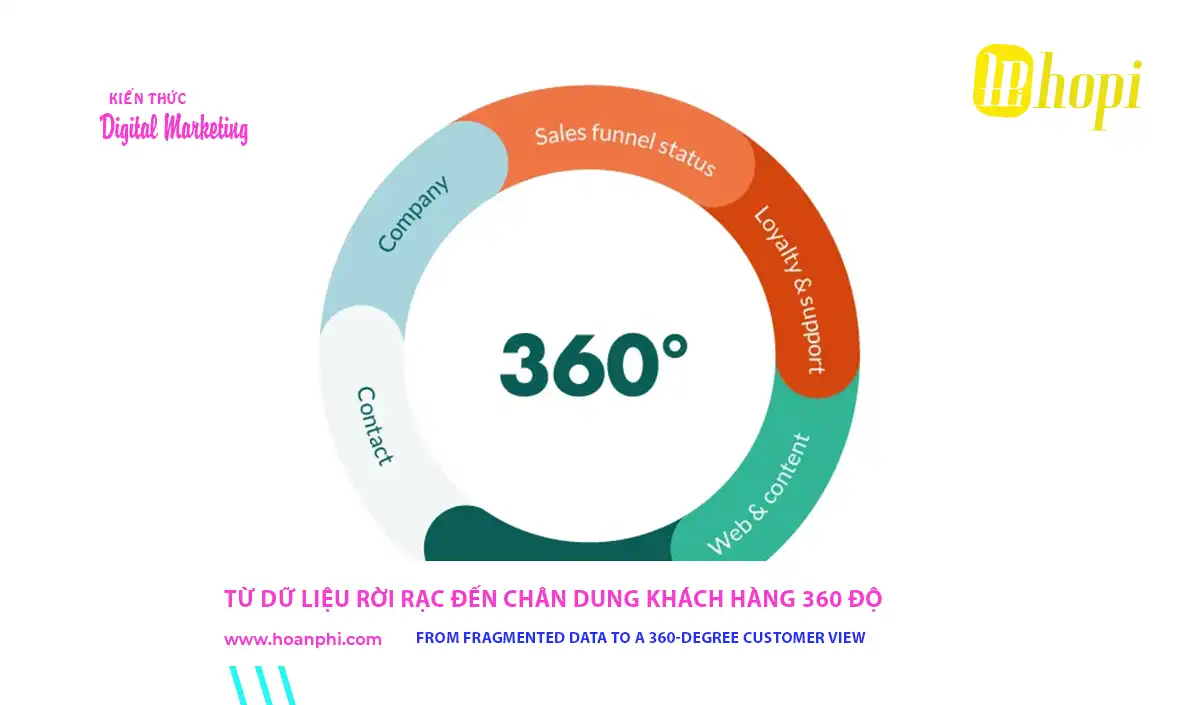
In the digital age, data is hailed as the new "oil," an invaluable asset for any business. Every day, we collect a vast amount of information from countless touchpoints: website visits, social media interactions, purchase histories, support calls, email campaigns, and more. However, the greatest challenge lies not in collection, but in connecting these fragmented pieces of data into a cohesive picture—a complete 360-degree customer view. Achieving this comprehensive perspective is not just a competitive advantage; it is the core foundation for a business to survive and thrive sustainably in an increasingly fierce market.
Why is customer data often fragmented and scattered?
Before diving into the solution, we need to understand the root of the problem. Fragmented customer data is not a rare phenomenon but a common reality in most organizations, stemming from various objective and subjective causes:
- The existence of data "Silos": This is the primary cause. Each department within a company often uses separate systems and tools for its specific purposes. The Marketing department uses Email Marketing tools and a CRM. The Sales department has an order management system. The Customer Service department has ticket-logging software. As a result, data becomes isolated within these "silos," lacking interconnection and sharing, creating one-sided views of the customer.
- The diversity of interaction channels: Today's customers interact with brands through numerous channels: websites, mobile apps, social media, physical stores, call centers, etc. Each channel generates a separate data stream. Without a unified system, a business will only see customer behavior on individual channels, not their entire journey.
- Legacy Systems: Many businesses, especially long-established ones, still use technology systems built years ago. These systems often lack the flexibility to integrate with new platforms, making data synchronization extremely difficult and costly.
- Inconsistent data entry: Human error is also a significant factor. Manual data entry that doesn't follow a common standard (e.g., abbreviating names, incorrect phone number or email formats) leads to duplicate, inaccurate data that is difficult to clean and unify.
What is a 360-degree customer view and why is it important?
A 360-degree customer view is a unified, comprehensive, and continuously updated profile of each customer. It includes not only basic demographic information (name, age, gender, address) but also consolidates all other relevant data:
- Transactional data: Purchase history, average order value, purchase frequency, viewed products.
- Behavioral data: Pages visited on the website, time spent on pages, links clicked, email marketing interactions, social media activity.
- Interaction data: History of calls to the support center, chat content, feedback, complaints.
- Predictive data: Churn risk score, Customer Lifetime Value (CLV), likely next-to-purchase products.
The importance of building this profile is undeniable. It offers strategic benefits to the business:
1. Personalization at scale: When you deeply understand each customer, you can deliver messages, product recommendations, and content that truly align with their needs and interests. This creates a feeling of being specially cared for, fostering engagement and loyalty.
2. Improved customer service: When a support agent can see a customer's entire interaction and transaction history, they can resolve issues faster and more effectively, without requiring the customer to repeat information.
3. Optimized Marketing campaigns: Instead of mass campaigns, you can segment customers accurately and run effective targeted campaigns, thereby optimizing your budget and increasing conversion rates.
4. Accurate analysis and forecasting: Unified data is the foundation for predictive analytics models, helping businesses anticipate customer needs, identify churn risks, and discover opportunities for cross-selling or up-selling.
What are the steps to build an effective 360-degree customer view?
Building a 360-degree view is not a one-time project but an ongoing process. Here are the basic steps a business should take:
Step 1: Identify and map data sources
Start by listing all the places where customer information is stored. This could be your CRM system, e-commerce platform, Google Analytics, social media pages, in-store POS systems, survey data, etc. This mapping gives you a comprehensive overview of your data ecosystem.
Step 2: Integrate and unify data
This is the most technically complex step. The business needs a technology solution capable of connecting to all identified data sources and pulling the data into a single location. This process includes cleaning (removing junk data), standardizing (converting to a common format), and deduplicating (identifying and merging profiles belonging to the same customer).
Step 3: Enrich and analyze data
Once you have a unified data source, you can enrich it by adding third-party data (if needed) or applying AI/Machine Learning algorithms to infer new attributes like interests, purchase intent, or segmenting customers into different groups based on behavior.
Step 4: Visualize and activate data
Data is only valuable when it is used for decision-making and action. Build intuitive dashboards so that departments can easily access and leverage the information. More importantly, connect this 360-degree customer profile to execution tools like Email Marketing, advertising platforms, and website personalization engines to activate campaigns automatically and intelligently.
How to apply the 360-degree customer view in a marketing strategy?
Having a comprehensive customer profile opens up countless opportunities to elevate marketing activities. This is no longer a theoretical concept but a practical application with tangible results. Your digital marketing strategies will become sharper and more effective than ever.
For example: a customer who frequently views products for newborns on the website and has previously purchased diapers and formula. The system will automatically identify them and send an email about a promotion on baby strollers, instead of a generic email about all products. Or, for a customer who just contacted support with an issue, the system will temporarily pause displaying up-sell ads to them to avoid causing frustration.
In this way, every touchpoint on the customer journey is optimized. From the first ad they see, the website content they browse, the emails they receive, to the conversation with a service representative, everything is consistent, relevant, and creates a seamless, positive experience.
Conclusion
The journey of transforming fragmented data into a 360-degree customer view is challenging but incredibly rewarding. It requires investment in technology, a shift in mindset, and close collaboration between departments. Businesses that succeed in building and leveraging this comprehensive view will hold the key to deeply understanding their customers, creating superior experiences, and breaking away in the race for consumers' hearts and minds. This is the core spirit of Marketing 5.0, where technology is used to serve and enhance human value.
Related Posts:


Để lại bình luận
Bình luận & Phản hồi
Đang tải bình luận...