


Discover Marketing 5.0 and how to create a seamless multi-touchpoint customer experience. Leverage technology to personalize the journey, drive growth, and build brand loyalty in the digital age.
In the ever-evolving digital landscape, consumer behavior has changed dramatically. Today's customers don't just buy products; they seek seamless, personalized, and meaningful experiences across every channel of interaction. To meet these rising expectations, a new era of marketing has emerged: Marketing 5.0 - Technology for Humanity. This is not just a step up from Marketing 4.0 but a true revolution, where advanced technology is used to enhance and emulate the human experience, especially in creating a flawless multi-touchpoint customer journey.
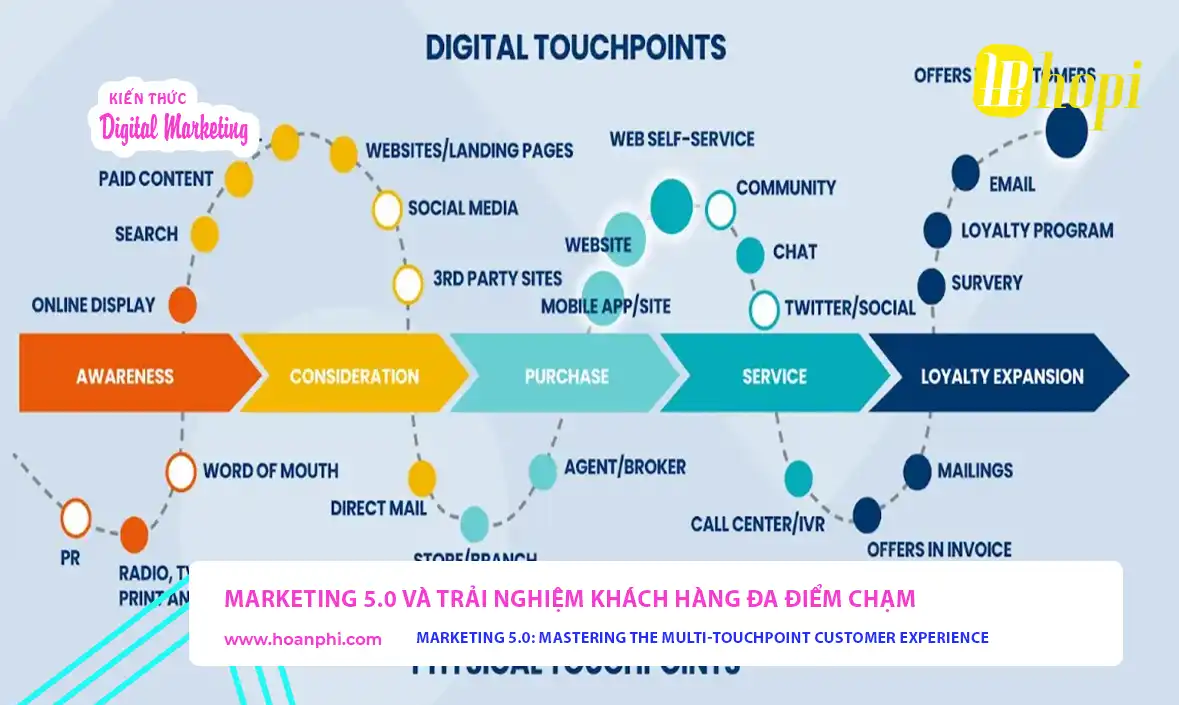
What is Marketing 5.0 and why is it important?
Defined by the "father of modern marketing," Philip Kotler, Marketing 5.0 is the application of human-mimicking technologies to create, communicate, deliver, and enhance value across the customer journey. While Marketing 4.0 focused on the transition from traditional to digital marketing, Marketing 5.0 goes deeper by harmoniously combining the power of technology and humanity.
It's not about replacing humans with machines, but about using technologies like Artificial Intelligence (AI), Natural Language Processing (NLP), the Internet of Things (IoT), and Augmented Reality (AR) to free marketers from repetitive tasks, allowing them to focus on strategy, creativity, and building genuine relationships with customers. Its importance lies in its ability to solve the dual challenge of meeting the demand for personalization at scale and creating emotional connections in an increasingly digitized world.
How does the multi-touchpoint (Omnichannel) customer experience work?
The multi-touchpoint customer experience, also known as Omnichannel, is a customer-centric approach where all channels (online and offline) are seamlessly integrated to create a consistent and synchronized experience. It is completely different from Multichannel, where channels operate independently and often lack connection.
Imagine the following scenario:
- Touchpoint 1 (Social Media): Alex sees an ad for a new pair of running shoes on Instagram.
- Touchpoint 2 (Website): He clicks the ad, visits the brand's website to view product details, read reviews, and check available colors.
- Touchpoint 3 (Mobile App): Alex adds the shoes to his cart on the website but doesn't complete the purchase. A few hours later, he receives a push notification on the brand's mobile app reminding him about the item in his cart.
- Touchpoint 4 (Physical Store): Over the weekend, Alex visits the nearest store to try the shoes on. A store associate scans the barcode and immediately knows that Alex was interested in this product online.
- Touchpoint 5 (Email): After making the purchase in-store, Alex receives a thank-you email with care instructions and a few tips for maintaining the shoes.
In this scenario, every touchpoint is connected, data is shared across channels, creating a smooth, uninterrupted, and highly personalized shopping journey for Alex. That is the power of the Omnichannel experience.
What role does technology play in creating the Marketing 5.0 experience?
Technology is the backbone of Marketing 5.0. Without the right tools, creating a seamless Omnichannel experience at scale is impossible. Here is the role of some key technologies:
- Artificial Intelligence (AI) and Machine Learning: AI analyzes vast amounts of customer data to predict behavior, personalize product recommendations (like Netflix or Amazon), optimize advertising campaigns, and provide 24/7 customer service through intelligent chatbots.
- Big Data and Analytics: Collecting and analyzing data from every touchpoint allows businesses to gain a 360-degree view of the customer. This helps them gain deep insights into needs, preferences, and pain points in the customer journey to make improvements.
- Internet of Things (IoT): IoT devices connect the physical and digital worlds. For example, sensors in a store can track customer flow, or smart products can automatically reorder supplies when running low, creating convenient and proactive experiences.
- Augmented Reality (AR) and Virtual Reality (VR): AR/VR delivers immersive product experiences. Customers can use AR to "try" a piece of furniture in their home before buying (IKEA Place) or "try on" a new lipstick shade via their phone's camera (Sephora).
How can businesses build an effective multi-touchpoint customer experience strategy?
Building a successful Omnichannel strategy requires investment and commitment. Here are the basic steps a business can take:
- Map the Customer Journey: Start by putting yourself in the customer's shoes. Identify all potential touchpoints where they might interact with your brand, from the awareness stage to post-purchase. Understand what they think, feel, and do at each stage.
- Unify Customer Data: Break down data silos. Use a Customer Data Platform (CDP) to collect, unify, and manage data from all channels (CRM, website, social media, point of sale, etc.) into a single customer profile.
- Choose the Right Technology: Invest in tech tools that support your strategy. This may include a Customer Relationship Management (CRM) system, a marketing automation platform, data analytics tools, and AI solutions.
- Personalize Across All Channels: Use the unified data to deliver personalized messages and experiences on every channel. If a customer viewed a product on your website, show them an ad for it on social media or send a reminder email. This is a crucial part of modern digital marketing.
- Train Your Team and Foster a Customer-Centric Culture: Technology is just a tool. People are the deciding factor. Ensure that all departments (Marketing, Sales, Customer Service) understand and are committed to the Omnichannel strategy.
- Measure and Optimize Continuously: Track key performance indicators (KPIs) such as Customer Lifetime Value (CLV), Customer Retention Rate, and Customer Satisfaction Score (CSAT). Use these insights to continuously improve and optimize the experience.
What are the challenges of implementing Marketing 5.0?
Despite its tremendous benefits, implementing Marketing 5.0 and an Omnichannel strategy comes with its fair share of challenges:
- Data Privacy: Collecting more data comes with a greater responsibility to protect it. Businesses must comply with strict regulations like GDPR and ensure transparency with customers about how their data is used.
- Cost and Complexity of Technology: Investing in new technology platforms can be expensive, and integrating them into existing systems is a complex process.
- Skills Gap: There is a market shortage of personnel with the right skills to manage and analyze data, operate marketing automation and AI tools.
- Maintaining the Human Element: One of the biggest risks is over-relying on automation and losing the genuine, emotional connection with customers. A balance must be struck between technological efficiency and human empathy.
In conclusion, Marketing 5.0 is not a fleeting trend but a necessary evolution in how businesses approach their customers. By leveraging technology to create seamless, personalized, and human-centric multi-touchpoint experiences, brands can not only survive but thrive in the digital age. The key to success lies in viewing technology not as the end goal, but as a powerful means to serve and enrich the human experience.
Related Posts:


Để lại bình luận
Bình luận & Phản hồi
Đang tải bình luận...