


Discover Marketing 5.0: the groundbreaking synergy of humans and machines. Learn how technology and human intelligence create a winning formula for businesses, delivering superior and sustainable customer experiences in the digital age.
In the relentless whirlwind of the technological revolution, the field of marketing has witnessed spectacular transformations. From product-centric Marketing 1.0, customer-oriented 2.0, value-driven 3.0, to the traditional-to-digital shift of 4.0. Now, we stand at the threshold of a new era: Marketing 5.0 - Technology for Humanity. This is not about replacing humans with machines, but about a powerful synergy where artificial intelligence and human sensitivity blend to create outstanding customer experiences and sustainable value. The success formula is no longer "Humans or Machines" but precisely "Humans + Machines".
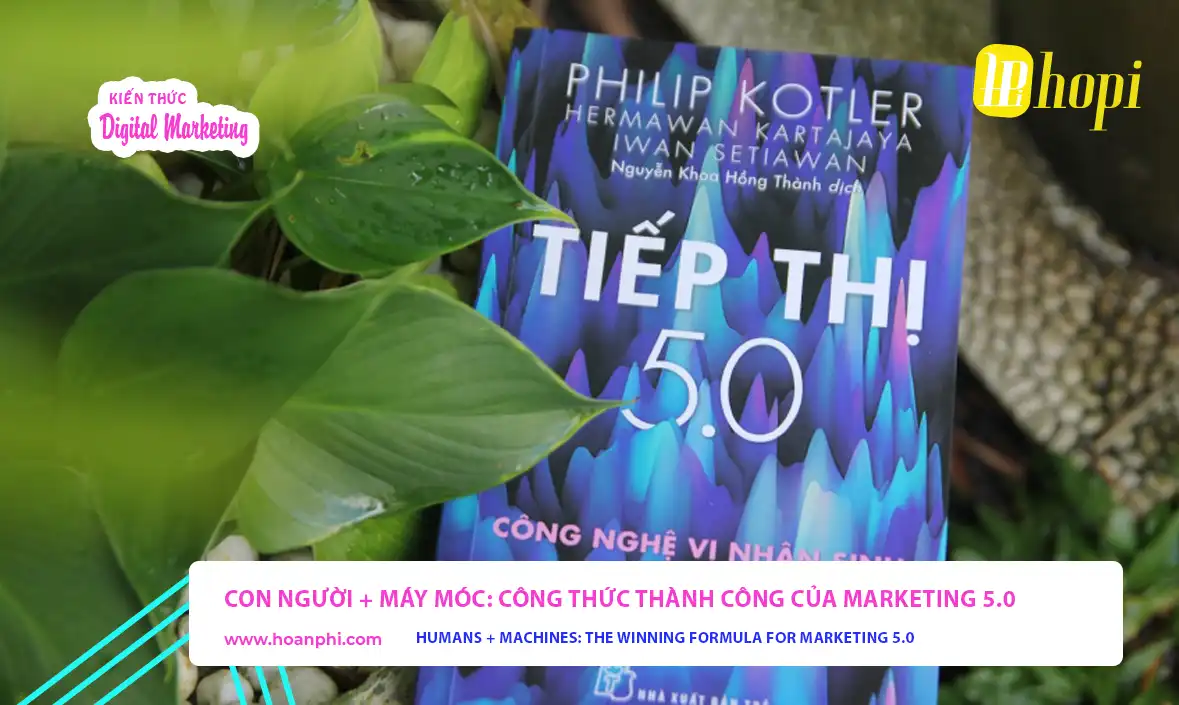
What is Marketing 5.0 and why is it important?
Defined by marketing legend Philip Kotler, Marketing 5.0 is the application of human-mimicking technologies to create, communicate, deliver, and enhance value across the customer journey. It's not just about technology; it's about using technology to improve the quality of life and create a better world. In today's digital landscape, where customers expect instant personalization and seamless experiences, Marketing 5.0 has become more crucial than ever.
The core difference lies in its objective: "Technology for Humanity". If Marketing 4.0 focused on moving marketing to the digital sphere, Marketing 5.0 focuses on leveraging the power of advanced technology to create meaningful interactions, deliver empathy, and build trust. It is composed of five key elements:
- Data-Driven Marketing: Collecting and analyzing data from every touchpoint to make accurate decisions.
- Predictive Marketing: Using AI and machine learning to forecast future customer behaviors and needs.
- Contextual Marketing: Delivering content and experiences tailored to the specific context of each customer in real-time.
- Augmented Marketing: Using technologies like chatbots and virtual assistants to enhance the marketing team's ability to interact at scale.
- Agile Marketing: Applying agile methodologies to rapidly test, learn, and optimize campaigns.
What role does technology play in Marketing 5.0?
The "Machine" component in the Marketing 5.0 formula is a collection of breakthrough technologies that act as the analytical brain and an extended arm for marketers. They handle complex, repetitive tasks with a speed and scale that humans cannot achieve.
Artificial Intelligence (AI) and Machine Learning (ML) are the heart of Marketing 5.0. They can analyze massive amounts of data (Big Data) to identify behavioral patterns, create micro-segments of customers, personalize content, and predict trends. For instance, an e-commerce system can use AI to recommend products you are most likely to buy, based on your browsing history, abandoned carts, and the behavior of similar users.
Natural Language Processing (NLP) powers chatbots and virtual assistants, enabling them to understand and respond to customer queries 24/7 in a natural way. NLP is also used for sentiment analysis on social media, helping brands to gauge public opinion and react promptly.
The Internet of Things (IoT) connects physical devices to the internet, creating a continuous data ecosystem. From smartwatches to smart refrigerators, these devices provide valuable information about users' habits and living contexts, allowing brands to create subtle, contextual marketing experiences. This is a crucial part of the overall picture of modern digital marketing.
Is the human element still necessary in the age of automation?
The answer is: More necessary than ever. If machines are the analytical brain, then humans are the heart and soul of the marketing strategy. Technology can tell you "WHAT" (a customer bought product A), but only a human can truly understand "WHY" (the motivation, emotion, or pain point behind that behavior).
The role of humans in Marketing 5.0 focuses on aspects that machines cannot yet replace:
- Strategy and Vision: Humans set goals, define the brand's core values, and build long-term strategies. Machines are the tools to execute that strategy effectively.
- Creativity and Storytelling: An AI can generate an article, but it lacks the nuance, humor, and emotional depth to create a brand story that truly moves people. Breakthrough creativity remains the domain of humans.
- Empathy and Emotional Intelligence (EQ): Humans have the ability to put themselves in the customer's shoes, understanding their worries and desires. This empathy is the key to building genuine relationships and lasting loyalty.
- Ethics and Judgment: In the world of data, issues of privacy and ethics are complex. Humans must be the final decision-makers, ensuring that technology is used responsibly and does not harm customers.
How to effectively combine humans and machines?
A successful combination is not about a 50/50 split of tasks, but about creating a seamless workflow where both sides support and enhance each other's capabilities. Here are a few effective approaches:
1. Big Data, Deep Insights: Let machines collect and process terabytes of customer data. Then, human analysts step in to interpret those dry numbers into deep insights. For example, a machine might detect that 70% of customers abandon their cart at the payment step. A human will investigate the cause: is the interface complicated, are shipping fees too high, or is a payment method missing? From there, they devise a solution.
2. Smart Automation, Subtle Personalization: Use marketing automation tools to send emails and messages based on customer behavior (e.g., birthday greetings, cart reminders). But the content of those messages must be crafted by humans, with warm, relatable language that reflects the brand's spirit. A chatbot can handle 80% of frequently asked questions, but complex issues or complaints should be immediately escalated to a human customer service agent to be resolved with empathy.
3. AI-Augmented Creativity: Marketers can use AI tools to analyze successful campaigns, suggest catchy headlines, or even draft initial ideas. However, it is the human who will select, refine, and develop those ideas into a complete, unique, and emotional campaign.
What are the challenges of implementing Marketing 5.0?
Adopting Marketing 5.0 is not a walk in the park. Businesses will face several significant challenges:
- Investment Cost: Implementing AI systems, CRMs, and data analytics platforms requires a substantial initial investment.
- Talent Shortage: The demand for professionals with a hybrid skill set of marketing, data analysis, and technology (martech) is high, leading to a shortage in the labor market.
- Security and Privacy: The more data you collect, the greater the responsibility to protect it. Businesses must strictly adhere to regulations like GDPR and build trust with customers about how their data is used.
- Organizational Culture Change: Shifting to Marketing 5.0 requires a mindset change across the entire organization, breaking down silos between marketing, IT, and sales departments.
Conclusion
The future of marketing is not a battle between humans and machines. Instead, it is a beautiful dance, where the speed and precision of technology combine with the creativity, strategy, and compassion of humans. Marketing 5.0 is the art of orchestrating that dance. The most successful brands will be those that know how to harness the power of both, using machines to understand customers at scale and using humans to connect with them on a deep, meaningful level. The Humans + Machines formula is not just a trend; it is the very foundation for sustainable growth and success in the digital age.
Related Posts:


Để lại bình luận
Bình luận & Phản hồi
Đang tải bình luận...