


In the digital age, technology is a powerful tool, but emotion is the true connection. Discover why combining high-tech with high-touch empathy is the ultimate key to success.
We are living in an era where artificial intelligence (AI), Big Data, and automation are no longer science fiction concepts but have permeated every corner of our lives and businesses. Algorithms can predict shopping behaviors, chatbots can answer customers 24/7, and workflows are optimized to the second. Amidst this technological whirlwind, a crucial question arises: Is there still a place for human emotion? The answer is not just "yes," but a strong affirmation that the more high-tech we become, the more we need high-touch.
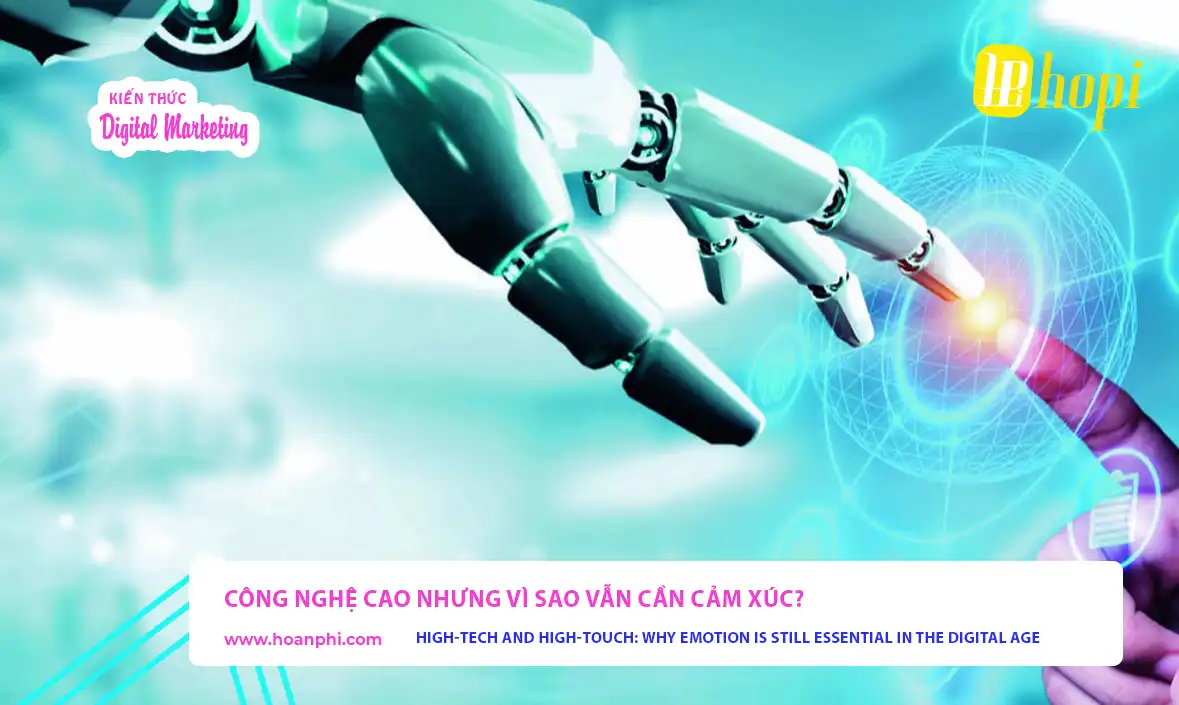
Why Can't Technology Completely Replace Human Emotion?
Technology, no matter how advanced, is fundamentally a tool for processing logic and data. It can mimic, analyze, and respond based on pre-programmed patterns, but it lacks the depth and complexity of human emotion. Emotions are not just chemical reactions in the brain; they are the foundation of empathy, intuition, creativity, and the ability to build relationships.
Consider a simple example: a customer service chatbot. It can retrieve order information and answer frequently asked questions quickly and accurately. But when a customer is genuinely angry about a bad experience, they don't just need a solution. They need to be heard, understood, and reassured. This is where the empathy of a human agent becomes invaluable. A sincere statement like, "I understand your frustration, and I'm here to help," has the power to soothe and rebuild trust in a way that no line of code can fully replicate.
Furthermore, significant human decisions, especially in purchasing, are rarely based solely on logic. We buy a car not just for its technical specifications, but for the feeling of freedom it provides. We remain loyal to a brand not just for its product quality, but for the values and story it represents. These emotional connections create a more sustainable loyalty than any discount program. Technology can analyze data to show *what* customers buy, but only empathy can help us understand *why*.
What is Marketing 5.0 and What is the Role of Emotion Within It?
To better understand this intersection, we need to look at the concept of Marketing 5.0, defined by Philip Kotler as "Technology for Humanity." This is the next stage in the evolution of marketing, where businesses seek to combine the power of advanced technology (like AI, NLP, IoT, AR/VR) with the human element to deliver value to customers throughout their entire journey.
Marketing 5.0 is not about technology replacing humans. On the contrary, it uses technology to amplify what humans do best: creativity, empathy, and critical thinking. The ultimate goal is not just to sell products, but to create seamless, personalized, and emotionally resonant customer experiences.
Within this framework, emotion plays the role of the soul. Technology provides the skeleton and nervous system – the infrastructure to collect data, automate processes, and deliver messages. But it is emotion that breathes life into it. Businesses use AI to analyze terabytes of data not to find soulless numbers, but to uncover deep insights into customers' hidden needs, pains, and desires. From there, they can create messages, products, and services that touch consumers' hearts, making them feel understood and valued.
How Can Businesses Combine Technology and Emotion in Their Strategy?
Balancing high-tech with high-touch is an art. Here are some ways businesses can do this effectively:
- Personalization at scale, with heart: Use data to create personalized experiences. Instead of generic emails, send product recommendations based on shopping history, sincere birthday wishes, or content tailored to individual interests. The key is to make customers feel like unique individuals, not just another row in a spreadsheet.
- Empowering customer service: Automate simple and repetitive queries to free up customer service agents' time. This allows them to focus on resolving complex issues that require empathy, creative problem-solving, and building real relationships with customers.
- Storytelling through technology: Leverage technologies like Augmented Reality (AR) and Virtual Reality (VR) to create vivid and engaging brand stories. Allow customers to "experience" a product before buying it or immerse themselves in the brand's world. These experiences create powerful and distinct emotional memories.
- Building meaningful communities: Use digital platforms not just for product promotion but to build a community where customers can connect with each other and the brand. Create a safe space for sharing, discussion, and feeling a sense of belonging to something bigger.
What Mistakes Should Be Avoided When Applying Technology Without Considering the Human Factor?
On the path to technological integration, many businesses make mistakes that can erode customer relationships. Recognizing and avoiding them is crucial.
- Over-automation: When every touchpoint, from welcome emails to support chatbots, is automated, the brand becomes cold and impersonal. Customers start to feel like they are interacting with a machine, not an organization with people behind it. It's essential to identify critical touchpoints in the customer journey to prioritize human intervention.
- Ignoring qualitative feedback: Metrics like click-through rates and conversion rates are important, but they don't tell the whole story. Ignoring social media comments, detailed reviews, or direct conversations with customers means missing out on the deep insights into the emotions and context behind the numbers.
- Privacy invasion: Using data for personalization is a double-edged sword. When done subtly, it feels caring. But when it crosses the line, it becomes creepy and invasive. Businesses must be transparent about how they collect and use data, and always respect customer privacy.
- Losing the brand voice: Over-reliance on AI content generation tools can dilute a brand's unique personality and voice. The content might be SEO-friendly and grammatically correct, but it lacks the "soul," humor, or distinct style that attracted customers in the first place. The most successful digital marketing strategies are always a blend of tool efficiency and human creativity.
What Does the Future of Interaction Between Technology and Emotion Look Like?
Looking ahead, the relationship between technology and emotion will become increasingly symbiotic. We will witness the rise of Emotional AI (Affective Computing), systems capable of recognizing, interpreting, and even responding to human emotions through analysis of voice, facial expressions, and body language. This will usher in a new era of hyper-personalized services, where experiences are tailored not just based on behavior, but on the user's emotional state in real-time.
However, as technology becomes more emotionally "intelligent," the value of genuine human-to-human connection will soar. Authentic, unscripted moments of interaction will become the luxury differentiator that customers are willing to pay a premium for. The most successful brands will be masters of orchestrating a complex symphony, knowing when to use an efficient algorithm and when to offer a warm, human touch.
Conclusion
High-tech is not the enemy of emotion. It is a catalyst, a powerful tool that can help us connect with each other on a deeper level and at a greater scale than ever before. In the modern business world, having the best technology is not enough. Victory belongs to those who know how to use that technology to celebrate and enhance the human experience. Because ultimately, people don't buy products; they buy the feelings and solutions those products provide. And that is a truth that will never change, no matter how far technology advances.


Để lại bình luận
Bình luận & Phản hồi
Đang tải bình luận...