


A complete guide to the prayer for wealth on the 2nd day of Tet. Learn about offerings, auspicious hours, and the proper prayer text for a prosperous new year.
On the 2nd day of Tet, amidst the joyful atmosphere of the new year, it is not only a day for families to gather at the maternal grandparents' home but also a golden time for important spiritual rituals. According to Vietnamese tradition, this is the day for families to sincerely offer gifts and recite prayers, wishing for a new year filled with prosperity, abundant wealth, and smooth sailing in all endeavors. This article will serve as a comprehensive guide, instructing you from A to Z on how to prepare and perform the prayer for wealth on the 2nd day of Tet in the most solemn and meaningful way.
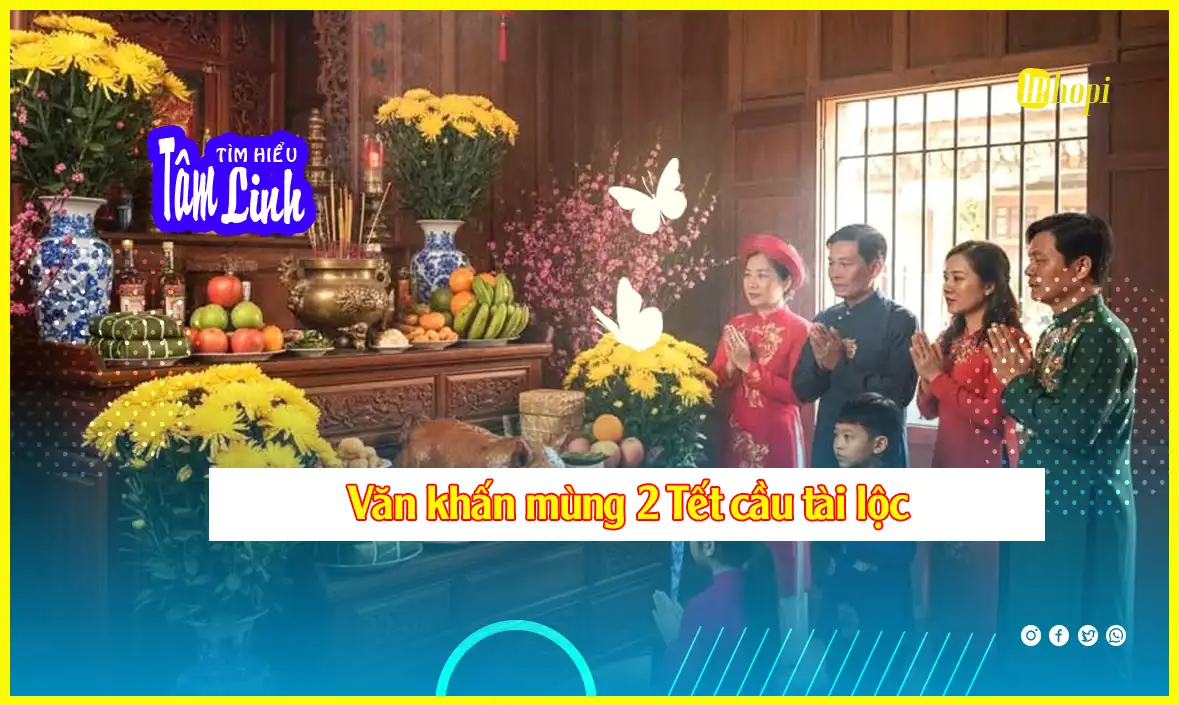
Why is worship on the 2nd day of Tet important?
The worship ceremony on the 2nd day of Tet holds profound significance in the spiritual culture of the Vietnamese people. It is not merely a superstitious activity but an expression of reverence and gratitude from descendants to their ancestors and the deities who have protected and sheltered the family throughout the past year. This ceremony is a prayer, a new beginning with hopes for luck, prosperity, and peace.
Furthermore, preparing the offering tray, lighting incense, and praying sincerely together is a way to strengthen family bonds and educate children about the tradition of "When drinking water, remember the source." It creates a solemn, warm atmosphere, reminding everyone of their roots and core family values. The 2nd-day ceremony is a bridge connecting the past and present, the tangible and intangible worlds, bringing faith and spiritual strength for everyone to enter a new year with new successes.
What is the best time to perform the Mung 2 Tet prayer?
Choosing an auspicious hour to conduct the worship ceremony is a factor many families consider, with the hope that all prayers will be witnessed and blessed. Although the specific times may vary each year, the Mung 2 Tet worship is usually performed during the day, most commonly in the morning.
Favorable time frames often chosen include:
- Hour of the Cat (5 AM - 7 AM): This is the beginning of a new day, with fresh, serene air, very suitable for spiritual rituals.
- Hour of the Dragon (7 AM - 9 AM): A beautiful time frame with good energy, suitable for praying for wealth and luck.
- Hour of the Snake (9 AM - 11 AM): Also one of the popular auspicious hours chosen by many families for the new year's ceremony.
However, the most important thing is the sincerity of the host. If you cannot arrange to worship during the above times, you can choose another time that suits your family's circumstances, as long as you maintain solemnity and sincerity during the ceremony.
What should be prepared for the Mung 2 Tet offering tray?
The offering tray for the 2nd day of Tet does not need to be overly elaborate but must be complete and tidy, showing the heart of the descendants. Depending on regional customs and the economic conditions of each family, the tray may vary, but it generally includes the following items:
- Incense and flowers: Aromatic incense, candles, a vase of fresh flowers (usually chrysanthemums, gladiolus, or lilies).
- Five-fruit tray: Beautifully arranged on the altar, symbolizing the five elements and wishes for wealth and prosperity.
- Betel and areca nuts: An indispensable offering in traditional Vietnamese rituals.
- Alcohol, tea, and pure water: Prepare 3 small cups of alcohol, a pot of good tea, and a cup of clean water.
- Votive paper: Paper money, paper clothes, etc., to offer to ancestors and deities.
- Savory food tray:
- Boiled chicken: A whole rooster, beautifully presented, often with a rose in its beak, symbolizing fullness and luck.
- Chung cake or Tet cake: The signature dish of Tet, symbolizing heaven and earth.
- Sticky rice: Usually Gac sticky rice or mung bean sticky rice, whose red and yellow colors represent luck and wealth.
- Vietnamese sausage (Giò lụa or Chả quế): A traditional, easy-to-prepare, and visually appealing dish.
- Soup: Usually bamboo shoot soup, dried pork skin soup, or chicken giblet vermicelli soup.
- Stir-fries and salads: A plate of mixed stir-fried vegetables or a pig's ear salad to enrich the feast.
What is the most accurate prayer text for wealth on the 2nd day of Tet?
Below are two of the most complete and solemn prayer templates, one for ancestors and one for the Land Genie and deities. You can refer to and adapt them to suit your family.
1. Ancestor Prayer on the 2nd Day of Tet
Namo Amitabha Buddha! (3 times)
We respectfully bow to: The Nine Generations of ancestors, both paternal and maternal, the ancestral grandmothers and grandfathers, all tiên linh (sacred spirits), deities, the Land Genie, the Kitchen God, and the Dragon Veins of this land.
Today is the 2nd day of the first lunar month of the year [Lunar Year Name].
Your devotee(s), I/we am/are: [Full Name], born in [Year of Birth], along with our entire family, residing at: [Address].
On the occasion of the new spring, we sincerely prepare offerings, incense, flowers, tea, fruits, gold and silver votive paper, and a bountiful feast, respectfully presented before the altar.
We respectfully invite our ancestral grandfathers, grandmothers, and all ancestral spirits from both paternal and maternal sides, to have mercy on your descendants, descend to this sacred space, witness our sincere hearts, and partake of these offerings.
We pray for a new year of peace and prosperity, a thriving family, joyful reunions, academic success for the children, smooth career paths, and abundant wealth. We ask for your blessing and protection, for all good things to come and all misfortunes to be averted.
With our modest offerings but sincere hearts, we bow before your altar, humbly asking for your blessing and protection.
Namo Amitabha Buddha! (3 times)
2. Prayer to Deities and Land Genie on the 2nd Day of Tet
Namo Amitabha Buddha! (3 times)
We respectfully bow to: The Deities, the local Tutelary God, the Land Genie, the Kitchen God, and all revered deities who govern this area.
Today is the 2nd day of the first lunar month of the year [Lunar Year Name].
Your devotee(s), I/we am/are: [Full Name], residing at: [Address].
We sincerely prepare offerings of betel nuts, areca leaves, incense, flowers, tea, and fruits, lighting this incense stick from our hearts and presenting it before your altar. We respectfully invite: The local Tutelary God, the Land Genie, the Kitchen God, the Deities of the Five Directions, the Dragon Veins, and the God of Wealth.
We humbly ask you to descend before our altar, witness our sincere hearts, and partake of these offerings.
We pray for your blessing for a new year, starting from the year of the Fire Horse 2026, to be always peaceful, our family to be safe, our business to prosper, and all endeavors to be successful. Please grant us wealth, luck, and abundant health.
With our modest offerings but sincere hearts, we bow before your altar, humbly asking for your blessing and protection.
Namo Amitabha Buddha! (3 times)
What are the important notes when worshiping on the 2nd day of Tet?
To ensure the ceremony is conducted with solemnity and full meaning, the host should note the following points:
- Dress appropriately: During the ceremony, family members should wear clean, tidy, and formal clothes. Avoid wearing shorts, revealing clothing, or sloppy attire.
- Clean the altar: The ancestor altar should be cleaned and organized before arranging the offerings. The worship space must be serene and solemn.
- Sincere attitude: This is the most crucial element. A lavish feast is meaningless without a sincere heart. When praying, one should read aloud, clearly, and slowly with utmost respect.
- Sequence of the ritual: After arranging the offerings, the host (usually the eldest male in the family) will light incense, pour alcohol, and recite the prayer. Other members stand behind and bow with clasped hands.
- Burn votive paper correctly: Wait until the incense has burned down about two-thirds of the way before burning the votive paper. The paper for ancestors and deities should be burned separately. This should be done in a clean, open area.
- Partake of the blessed food (Thụ lộc): After burning the votive paper, the host asks for permission to take down the offerings, and the family gathers to enjoy them. Everyone enjoys the meal in a joyful, warm atmosphere, as if receiving the new year's blessings from ancestors and deities, so that the coming year and even future ones like Tet 2030 will always be abundant and happy.
Conclusion
The ceremony and prayer on the 2nd day of Tet are not just a spiritual ritual but also a beautiful cultural feature, embodying the nation's moral principle of "When drinking water, remember the source." Preparing a neat offering tray and performing the ritual with sincerity is how we send our best wishes for a new year full of hope. We wish our readers and their families a new year of peace, prosperity, abundant wealth, and all wishes coming true!


Để lại bình luận
Bình luận & Phản hồi
Đang tải bình luận...