


A detailed guide to traditional Vietnamese Tet worship, from preparing offerings and New Year's Eve prayers to the 'Hóa Vàng' ceremony. Learn now for a complete, meaningful Tet and to welcome prosperity for your family.
The Lunar New Year, or Tet, is not only a time of transition between the old and new year but also an occasion for descendants to express their respect and gratitude to ancestors and deities. Among the traditions, worship rituals play an extremely important role, acting as a spiritual thread connecting generations and embodying Vietnamese cultural identity. This article will provide a detailed guide on how to perform Tet worship correctly according to customs, helping your family have a complete, peaceful, and fortunate start to the new year.
When does traditional Tet worship begin, and what ceremonies does it include?
According to long-standing customs, the series of important Tet worship ceremonies do not just take place during the first three days of the year but begin in the final days of the old year. Each ceremony carries its own meaning, showing the thoughtfulness and sincerity of the homeowner. The main worship ceremonies include:
- Kitchen Gods Worship (23rd of the 12th lunar month): This ceremony sends the Kitchen Gods to heaven to report to the Jade Emperor on the family's affairs throughout the past year.
- Year-End Ceremony (Tat Nien - afternoon of the 30th of Tet): This is the last family meal of the year, where an offering tray is presented to ancestors to invite them home for Tet, while also summarizing the past year.
- New Year's Eve Ceremony (night of the 30th, dawn of the 1st): This is the most important ritual, marking the transition from the old year to the new. It includes outdoor and indoor worship to see off the old year's celestial officials and welcome the new ones, praying for a peaceful year.
- Worship on the 1st, 2nd, and 3rd days of Tet: During the first few days of the new year, families continue to offer incense and meals on the ancestral altar, signifying that the ancestors are still present and celebrating with their descendants.
- Votive Paper Burning Ceremony (Hoa Vang - usually from the 3rd to the 7th day of Tet): This ceremony sees off the ancestors back to the spiritual world after their visit and involves burning votive papers to send material offerings to them.
What needs to be prepared for the ancestor offering tray during Tet?
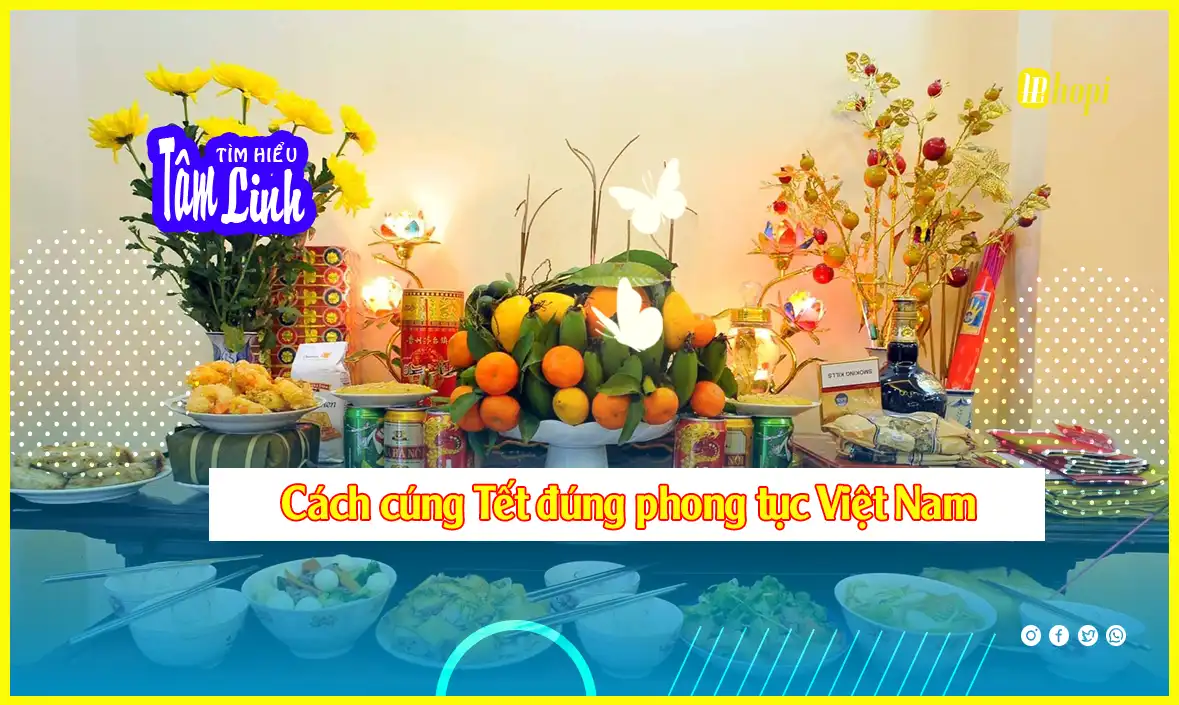
Preparing a well-appointed and complete offering tray is a way to show filial piety. Depending on the region and economic conditions, the offering tray may vary, but it generally includes the following items:
- Incense, flowers, and offerings: A five-fruit tray (symbolizing the five blessings), a vase of fresh flowers (usually chrysanthemums, gladioli, peach or apricot blossoms), incense, lamps or candles, betel leaves and areca nuts, tea, wine, clean water, and votive money and papers.
- Savory offering tray: A traditional Tet offering tray often consists of 4 bowls and 4 plates or 6 bowls and 6 plates, symbolizing abundance and prosperity. Essential dishes include:
- Boiled chicken: It must be a whole young rooster, boiled with its beak holding a red rose, symbolizing purity and a good beginning.
- Banh chung (or banh tet): Symbolizing heaven and earth (square and round), expressing gratitude to heaven, earth, and ancestors for favorable weather.
- Gac sticky rice: The red color of the gac fruit symbolizes luck, fortune, and happiness in the new year.
- Pork sausage (Gio lua/Gio thu): A traditional dish, signifying a peaceful and prosperous home.
- Bamboo shoot soup or pork skin soup: A clear, sweet soup symbolizing family reunion and warmth.
- Fried spring rolls (Nem ran/Cha gio): A popular dish that enriches the feast.
- Kohlrabi and carrot salad or pickled onions: Helps balance the palate and prevent richness from the many protein-heavy dishes.
How are the outdoor and indoor New Year's Eve worship ceremonies performed?
New Year's Eve worship (Le Tru Tich) is the most sacred ritual. The homeowner needs to prepare two offering trays: one for outdoor worship and one for indoor worship.
1. Outdoor New Year's Eve Worship:
This ritual signifies "seeing off the old and welcoming the new," bidding farewell to the celestial officials of the old year and welcoming the new ones who will govern the mortal world. The offering tray is usually placed in the front yard or on a rooftop, in a clean, solemn place.
- Offering tray: Often vegetarian or simpler than the indoor one, including: a boiled chicken, banh chung, sweets, betel and areca, wine, tea, fruits, salt, rice, and votive papers (with hats, robes, and boots for the officials).
- Procedure: At the stroke of midnight (00:00), the head of the household lights incense and lamps, dresses neatly, and sincerely recites the outdoor New Year's Eve prayer.
2. Indoor New Year's Eve Worship:
After completing the outdoor ceremony, the homeowner proceeds with the New Year's Eve worship at the ancestral altar. The purpose is to invite ancestors home to celebrate Tet, reunite with their descendants, and bless the family with a peaceful new year.
- Offering tray: This is the full savory feast prepared as described above. All dishes are beautifully arranged and served hot on the altar.
- Procedure: The head of the household lights incense, pours wine, and recites the prayer to the ancestors, inviting them to enjoy the offerings and witness the family's sincerity.
What is the most standard prayer for New Year's Eve?
Below is a sample prayer for the New Year's Eve ceremony (you can adapt it to fit your family):
Outdoor New Year's Eve Prayer:
"Namo Amitabha Buddha! (3 times)
We respectfully bow to:
- The Future Buddha Maitreya.
- The Emperor of Heaven, the Empress of Earth, and all Deities.
- The outgoing Grand Duke of the year... (name of the old official)
- The incoming Grand Duke of the year... (name of the new official)
Today is the 30th day of the 12th lunar month, at the moment of New Year's Eve, as the old year passes and the new year arrives. I, the faithful devotee..., residing at..., along with my entire family, sincerely prepare incense, flowers, and offerings.
We sincerely invite the outgoing and incoming Grand Dukes, along with all deities, to descend before this altar to receive these offerings. We pray for your blessings for our entire family to have a new year full of good fortune, prosperity, and success."
Indoor New Year's Eve Prayer (Ancestor Worship):
"Namo Amitabha Buddha! (3 times)
We respectfully bow to our ancestors, grandparents, uncles, aunts, siblings, and all ancestral spirits from both paternal and maternal lines.
Today, on New Year's Eve of the year..., I, the faithful devotee..., residing at...
At this sacred moment of transition, as the new year is about to begin, we have sincerely prepared offerings to present before your spiritual altar. We respectfully invite all our ancestors... to return and enjoy these offerings, reuniting with your descendants.
We humbly ask for your blessings and protection, granting us a new year of peace, prosperity, and good fortune."
What is different about worship on the 1st day of Tet?
The worship on the 1st day of Tet, also known as Chinh Dan, is the first worship ceremony of the new year. It is a time for descendants to offer the first meal of the year to their ancestors to show their filial piety. The offering tray does not need to be as elaborate as the one on New Year's Eve. The homeowner can offer freshly cooked food or reheat the offerings from the previous night.
The most important thing is a solemn atmosphere, with the family gathered before the altar. The eldest member will represent the family in lighting incense and praying for a good new year. Preparing for a prosperous Tet, not just for this year but for years to come like Tet 2034, all begins with these sincere rituals.
How is the 'Hoa Vang' ceremony to end Tet performed?
The Hoa Vang (votive paper burning) ceremony usually takes place from the 3rd to the 7th day of Tet. This ritual is to see off the ancestors back to the afterlife after their stay in the mortal world to celebrate Tet, and it also marks the end of the Tet holidays.
- Preparing offerings: An offering meal (savory or vegetarian), votive money and papers, a rooster, wine, fruits, and incense.
- Procedure: The homeowner places the offerings on the altar, lights incense, and recites a prayer asking for permission to burn the votive papers for the ancestors. After the incense has burned down about two-thirds, the votive papers are taken down and burned in a clean corner of the yard or in a special burner. While burning, family members clasp their hands and bow. The votive papers for the household deities are burned first, followed by those for the ancestors. Finally, the homeowner sprinkles a little wine on the ashes. These beautiful cultural traditions are preserved through the years, including in the future, such as the upcoming the Year of the Fire Horse 2026.
What are the taboos during Tet worship?
To ensure the rituals are respectful and genuinely express sincerity, families should be mindful of the following taboos:
- Keep the altar clean: The altar is a sacred place and must be cleaned thoroughly before offerings are displayed.
- Use fresh fruits and flowers: Do not use artificial flowers, wilted fruits, or sprouted fruits for offerings.
- Dress respectfully: When performing rituals, family members should wear clean, polite, and tidy clothing.
- Maintain a solemn attitude: During worship, avoid loud talking, arguing, or laughing.
- Do not taste the offerings: Never taste the food offerings before the ceremony is over and the offerings have been taken down.
Tet worship is a beautiful spiritual and cultural aspect of the Vietnamese people, embodying the principle of "When drinking water, remember the source." Performing these rituals with solemnity and sincerity not only helps express gratitude to ancestors but also brings peace of mind and faith in a prosperous and auspicious new year. Wishing you and your family a peaceful and prosperous New Year!


Để lại bình luận
Bình luận & Phản hồi
Đang tải bình luận...