


Discover why customers dislike generic ads but embrace personalized experiences. This article analyzes the psychology and effective marketing strategies for modern businesses.
In today's information-saturated digital world, consumers are exposed to thousands of advertising messages daily. From flashing banners on websites and auto-playing videos on social media to inboxes flooded with promotional emails. It's no surprise that the word "advertising" often evokes feelings of annoyance, intrusion, and disruption. Yet, these same customers show great interest when they receive an email recommending products based on their purchase history or a discount notification for an item they viewed last week. This is the core paradox of modern marketing: Customers hate ads, but they love personalization. So, what is the fine line between annoyance and understanding? This article will delve into the psychology behind this phenomenon and how businesses can leverage the power of personalization to win over customers.
Why is traditional advertising no longer effective?
Traditional advertising, especially mass display advertising, operates on a "shotgun" model – firing off a single message in the hope that it will reach a small fraction of the target audience. This approach is increasingly obsolete for the following reasons:
- It's disruptive and invasive: Ads often interrupt the user's experience. A 30-second unskippable ad before a 2-minute video is a prime example. This disruption creates a negative association with the brand, making customers feel their time is not respected.
- It lacks relevance: A single person living in a city doesn't care about diaper ads. A vegetarian doesn't want to see steak promotions. When a message is not relevant to the recipient's needs, interests, or circumstances, it is perceived as "junk" and immediately ignored. This phenomenon is known as "banner blindness," where users have become accustomed to ignoring anything that looks like an ad.
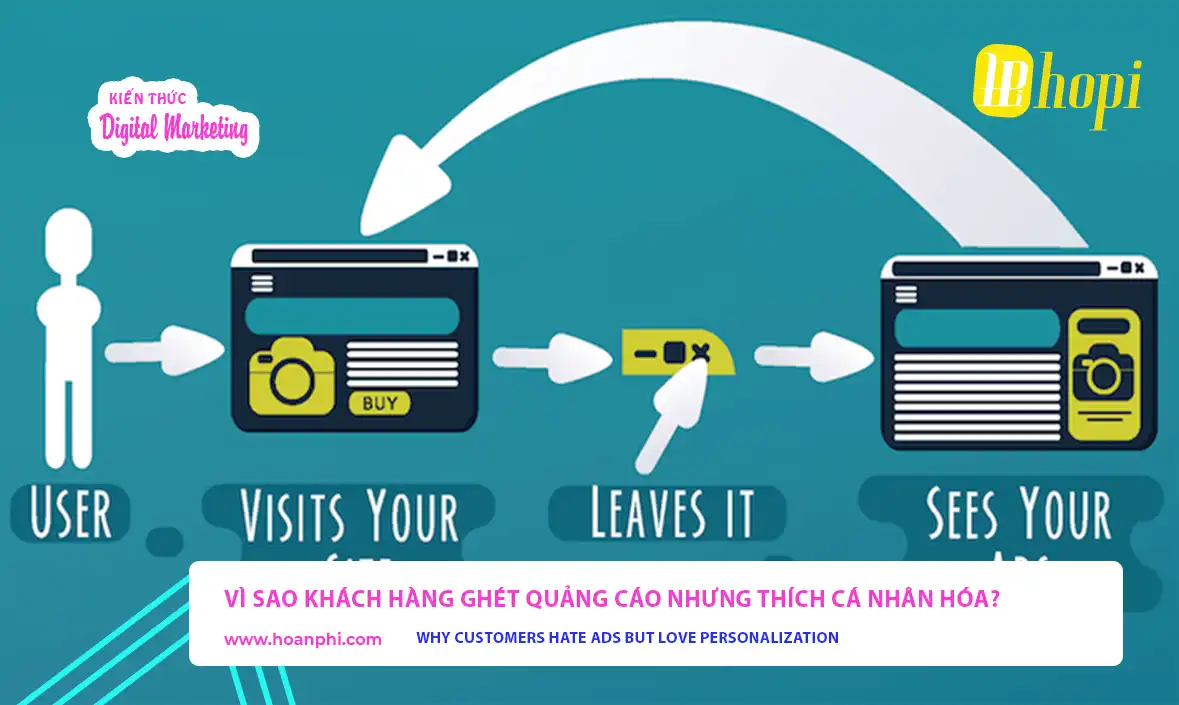
- It feels creepy: Although retargeting is a powerful tool, it can backfire if not executed skillfully. Being "haunted" by a product across every website you visit after just a single view can feel like an invasion of privacy rather than a helpful reminder.
What is personalization and why does it attract customers?
In contrast to mass advertising, personalization is the art and science of tailoring messages, products, and experiences to individuals based on data about their behavior, preferences, and needs. It's more than just inserting a customer's name into an email. It's a comprehensive strategy aimed at delivering real value. Personalization appeals to customers because it taps into deep psychological needs:
- Feeling understood and valued: When a brand sends you relevant suggestions, they are implicitly saying, "We know who you are, we understand what you need, and we are here to help." This transforms a commercial transaction into a relationship, making the customer feel like a unique individual, not just a number in a crowd.
- Saving time and effort: In a world of overwhelming choice, being offered suitable products helps customers reduce "decision fatigue." Netflix suggests movies you might like, Spotify creates playlists just for you, and Amazon displays related items. All of these simplify the decision-making process and improve the user experience.
- Increasing relevance and value: Personalization turns an advertising message from "annoying" to "helpful." A notification about a sale on the shoes you added to your cart last week is valuable information, not spam. It meets the right need at the right time.
What is the core difference between annoying ads and valuable personalization?
The line between these two concepts lies in intent and value. Traditional advertising focuses on the company's goal: to sell a product. Effective personalization focuses on the customer's goal: to solve a problem or meet a need. Selling becomes the natural outcome of providing value first. The differences can be summarized as follows:
- Intrusive vs. Supportive: Ads interrupt, while personalization assists.
- Generic vs. Specific: Ads speak to everyone, while personalization speaks to you.
- One-way vs. Interactive: An ad is an announcement, while personalization is a dialogue based on your actions.
- Product-centric vs. Customer-centric: Ads say, "Buy our product," while personalization says, "Here is a product that might help you."
How can businesses effectively apply personalization?
To transition from creating hated ads to loved personalized experiences, businesses need a systematic, data-centric strategy built on a technological foundation. This is the essence of Marketing 5.0 – the fusion of advanced technology and human-centricity to create superior customer value.
The steps to implementation include:
- Ethical Data Collection: Gather data from various touchpoints (website, app, social media, CRM) and, most importantly, be transparent with customers about how their data is used. Trust is the foundation of any relationship.
- Intelligent Analysis and Segmentation: Instead of relying solely on demographics, delve into behavioral analysis: what they view, what they buy, what they leave in their cart, when they are active. From there, create detailed customer segments (micro-segmentation) for tailored messaging.
- Using the Right Technology: Customer Data Platforms (CDPs), marketing automation tools, and Artificial Intelligence (AI) are key to deploying personalization at scale. They help analyze data, predict behavior, and automatically deliver the right messages at the right time.
- Omnichannel Implementation: Personalization should be applied consistently across all channels, from email and websites to mobile apps and even paid advertising. A seamless experience strengthens the brand relationship.
The future of marketing: Balancing technology and the human element
In conclusion, customers don't actually hate advertising. They hate irrelevance, interruption, and the feeling of being disrespected. Personalization, when done right, is the antidote to these problems. It transforms marketing from an act of annoyance into a helpful service.
The greatest challenge in modern digital marketing is finding the perfect balance between using technology for optimization and maintaining human empathy and understanding. Technology is the tool, but the strategy must always originate from a deep understanding of customer wants and needs. When businesses can put themselves in their customers' shoes and ask, "Does this message truly provide value to them?", they will be one step closer to creating experiences that customers not only accept, but genuinely love and look forward to.


Để lại bình luận
Bình luận & Phản hồi
Đang tải bình luận...